Stain mapping
Where the stain sits, when it grows — rain, snowmelt, wind from one direction — and how it has changed all narrow the search before anyone climbs a ladder.
Home / Services / Roof Leak Repair
Roofing help across the Treasure Valley
A ceiling stain tells you water is getting in; it almost never tells you where. Leak repair starts with tracing the water's actual path, because fixing the wrong spot is how leaks become recurring expenses.
Call center hours — Mon–Fri: 7 AM–10 PM · Sat: 8 AM–10 PM · Sun: 7 AM–9 PM
The details
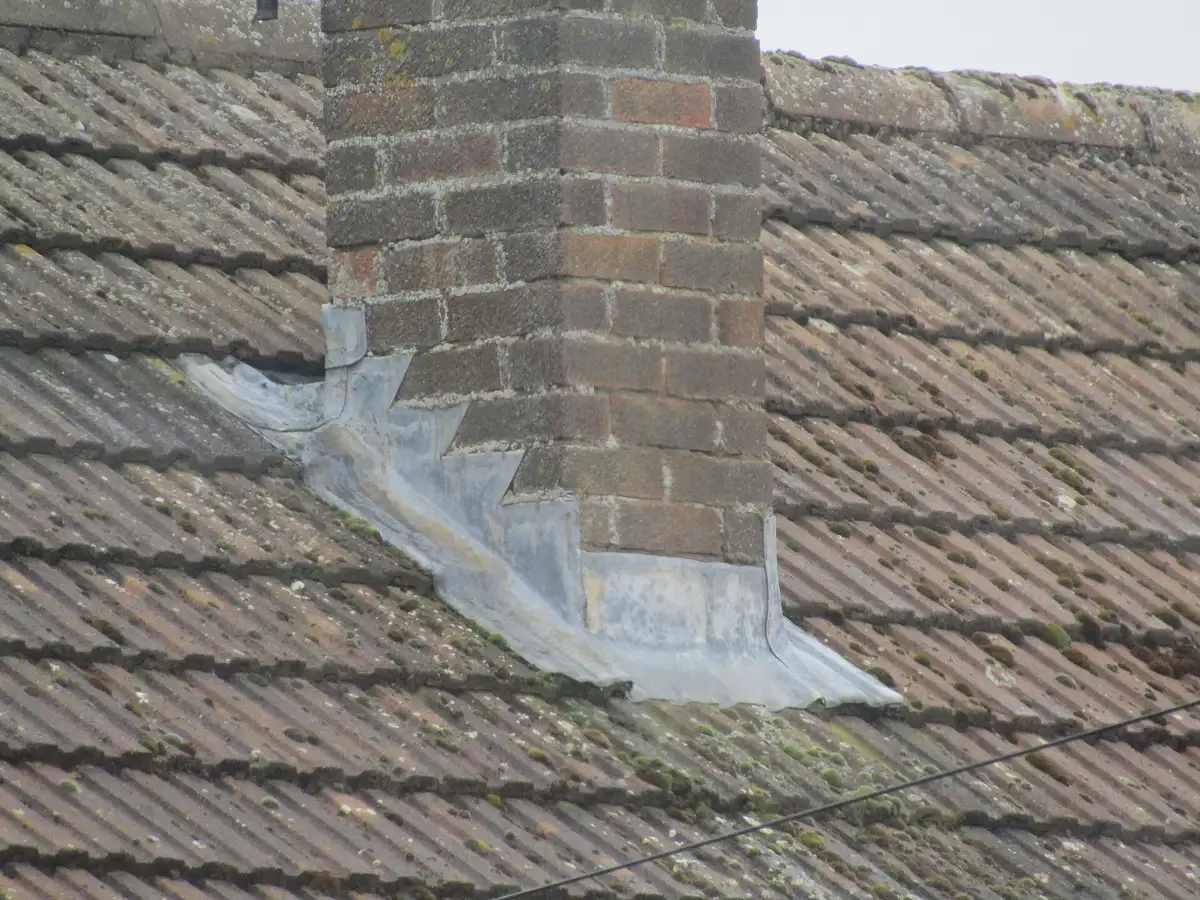
Roof leaks are detective work. Water enters at a failure point — a cracked vent boot, an opened flashing joint, a lifted shingle — then travels along the deck, a rafter or a pipe until it finds a way down through the ceiling, sometimes rooms away from where it got in. That is why leak repair begins with tracing: matching the stain's location and timing to the roof's geometry, then inspecting the suspect details uphill of the stain until the entry point is found and proven.
The most common sources in Boise homes are mundane: rubber vent boots split by sun, step flashing opened by years of expansion and contraction, valleys worn by concentrated water, and shingle damage on the slope above. Ice at the eaves adds a seasonal pattern — leaks that appear only during snowmelt usually point to the eave and underlayment, not the field of the roof. Each source has a correct mechanical repair; none of them is a smear of sealant, which is why 'repaired' leaks so often come back.
What's included
Where the stain sits, when it grows — rain, snowmelt, wind from one direction — and how it has changed all narrow the search before anyone climbs a ladder.
From inside, water trails on decking and rafters lead uphill to the entry point. Moisture readings separate active leaks from old, dry history.
Boots, flashing, valleys, chimneys, skylights and wall junctions uphill of the stain are examined one by one until the failure is found — a split, a gap, a lifted edge.
Failed vent boots are replaced; opened flashing is refitted or renewed in metal. These two categories close the majority of Boise household leaks.
Where the entry point is damaged shingles or a worn valley, the affected section is rebuilt with correct underlayment and integration.
For melt-season leaks, the fix addresses the eave: membrane coverage, gutter overflow paths and the ventilation balance that drives ice formation.
How it works
You share where the stain or drip is, when it appears and what the weather was doing — the pattern is half the diagnosis.
The provider maps the stain, then follows moisture trails in the attic toward the entry point.
The suspect details above and uphill of the stain are examined on the roof until the failure is identified.
The failed component is repaired or replaced mechanically, and the surrounding detail is checked for the same ageing.
You are told what to watch at the next rain or melt, and what it would mean if the stain changes or stays dry.
Tools & methods
Confirm which staining is active and which is old, so repairs target live leaks, not history.
For reading water trails in dark attic corners and behind chimney chases.
When a leak will not show itself, a hose used section by section on the roof reproduces it under observation — the definitive proof of an entry point.
Replacement boots, flashing metals and membranes carried for the common sources, so tracing and repair can happen in one visit.
Typical outcomes
Starting point: A bathroom ceiling stain that two rounds of sealant on the roof never cured.
Finished result: The split vent boot above it replaced — the actual source, found by tracing, not guessing.
Starting point: A leak that appears only when snow melts, chased across three winters.
Finished result: The eave identified as the entry zone and rebuilt with proper membrane coverage.
Starting point: Water tracking along a rafter to drip rooms away from the entry point.
Finished result: The opened chimney flashing refitted, and the stain dry through the next storm cycle.
Problems solved
Leaks that return after repair were sealed at the symptom. Tracing to the source is what ends the cycle.
A stain with no obvious roof damage above it usually means water travelled — the entry point is uphill, at a detail, waiting to be found.
Leaks tied to snowmelt or wind direction have specific mechanical causes — eave membrane, flashing laps — that a pattern-aware diagnosis identifies.
Local factors
Boise's leak calendar has two peaks. Spring brings the melt leaks: snow sitting on north slopes melts from attic heat, water backs up at the cold eave, and ceilings stain in rooms that stayed dry through every rainstorm. Late summer and fall bring the wind-driven rain leaks, where a flashing joint that sheds normal rain fails when rain arrives horizontally off the foothills. Telling the provider which pattern your leak follows cuts the tracing time dramatically.
Ageing housing stock adds a third local pattern. Much of Boise's 1990s and 2000s growth was roofed with materials whose rubber and sealant components are now at end of life together — boots, pipe flashings and sealant joints failing in the same few years across whole subdivisions on the Bench and in West Boise. If your home is that age and one detail has failed, the inspection checks the rest, because they were all installed on the same day.
Good questions
Water entering the roof runs downhill on the underside of the deck or along a rafter until it reaches a joint or low point it can drip from. On a typical Boise home that path can run several feet — occasionally into a different room. Tracing that path is the core skill of leak repair.
Usually, yes. Moisture trails, staining patterns and the condition of the details tell the story, and a controlled hose test can reproduce the leak section by section when needed. You do not have to wait for the next storm to start the diagnosis.
As a temporary weather-tight measure, sometimes. As a repair, almost never — sealant over a mechanical failure cracks, peels and hides the worsening problem underneath. Lasting leak repairs replace or refit the failed component: the boot, the flashing, the shingles.
That pattern points to the eave: meltwater backing up under the shingles at the cold edge, often helped by uneven attic insulation and ventilation. The repair addresses membrane coverage at the eave and the conditions creating the ice, rather than the shingle field above.
More urgent than it looks. By the time a stain shows on a ceiling, the deck and insulation above it have usually been wet repeatedly. Small leaks fixed early are detail repairs; left alone, they become deck rot, mold in the attic and a much larger scope.
Keep exploring
Full tear-off and replacement when the roof surface itself is at the end of its life — new decking repairs, underlayment, shingles and ventilation.
Learn more →RTargeted repairs for damage in one area — lifted or missing shingles, flashing failures, vent boots and small leaks — when the rest of the roof is sound.
Learn more →RA full on-roof and attic-side condition check — surface, flashing, ventilation and deck — with a plain-language summary of what is sound, what is failing and what can wait.
Learn more →MStanding seam and metal panel systems — long service life, clean snow shedding and a Class A fire rating that matters in the Boise Foothills.
Learn more →SArchitectural shingle installation and replacement — the Treasure Valley's most common roof, done with correct fastening, ventilation and flashing.
Learn more →GSeamless gutter installation and replacement, sized and sloped for Treasure Valley rain and snowmelt, with downspouts that move water away from the foundation.
Learn more →Ready when you are
One call connects you with an independent local provider. Describe the roof, hear your options, and schedule the inspection.
Call NowGet in touch
Call to be connected with a local roofing provider serving Boise and nearby areas. Share the details of the job on the call — what is happening, where you are, and when you would like the work done — and the next step will be set up from there.
Prefer to write first? Email the details and a reply will follow during call center hours.
Speak with the call center and get connected with a local provider.
Call NowMon–Fri: 7 AM–10 PM · Sat: 8 AM–10 PM · Sun: 7 AM–9 PM
Boise, ID and surrounding communities — see the areas page for the full list.